The chair
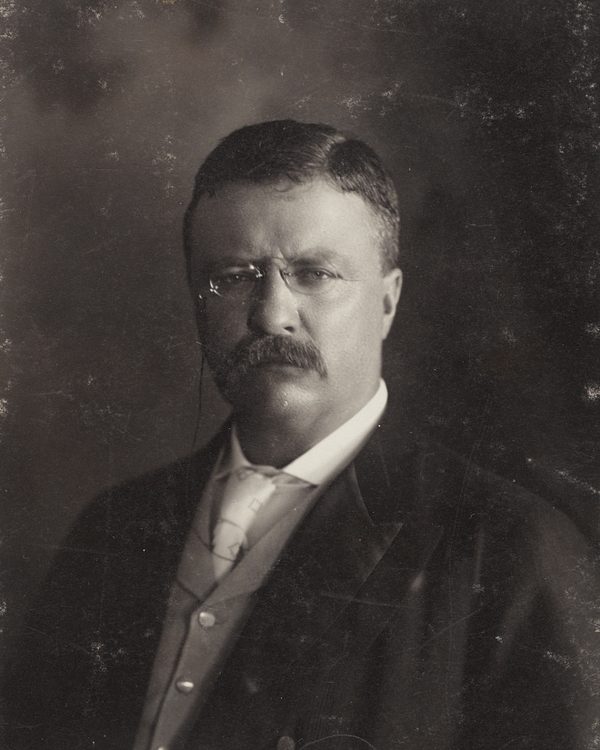
Theodore Roosevelt was born in New York City on October 27, 1858. He had been Assistant Secretary of the Navy, a colonel of volunteers in Cuba and governor of New York before he was elected vice president with William McKinley in 1900. McKinley was shot in Buffalo in September 1901, and Roosevelt took the oath there on September 14. He was forty-two.
On September 3, 1902, a trolley car hit the President's carriage near Pittsfield, Massachusetts. A Secret Service agent, William Craig, was killed, and Roosevelt was cut and bruised. Three weeks later, on a speaking tour, a swelling on his left leg had to be operated on at St. Vincent's Hospital in Indianapolis. He came back to Washington in a wheelchair, to the temporary White House on Jackson Place, and his surgeon operated again there on September 28.
The strike was in its fifth month and winter was coming. On October 3 Roosevelt brought both sides to Jackson Place: Mitchell and three district presidents of the United Mine Workers; Baer and the presidents of the other coal railroads; and John Markle for the independent operators. He received them in a wheelchair and a dressing gown, with his left leg on a cushion.
“There are three parties affected by the situation in the anthracite trade—the operators, the miners and the general public. I speak for neither the operators nor the miners, but for the general public.”Statement to the conference, October 3, 1902
Mitchell offered to send the men back to work if the President named a tribunal and both sides accepted its award. The operators refused and asked for troops. That day Roosevelt wrote to Senator Mark Hanna: “Well, I have tried and failed.”
The commission
He prepared to go further. In letters that month he described a plan to send in ten thousand regular troops, once the governor of Pennsylvania asked for help, and to have General John M. Schofield seize the mines and run them as receiver for the government. At the same time his Secretary of War, Elihu Root, went to J. P. Morgan. On October 11 Root spent most of a day aboard Morgan's yacht Corsair, and the two drafted an agreement for a commission to be appointed by the President.
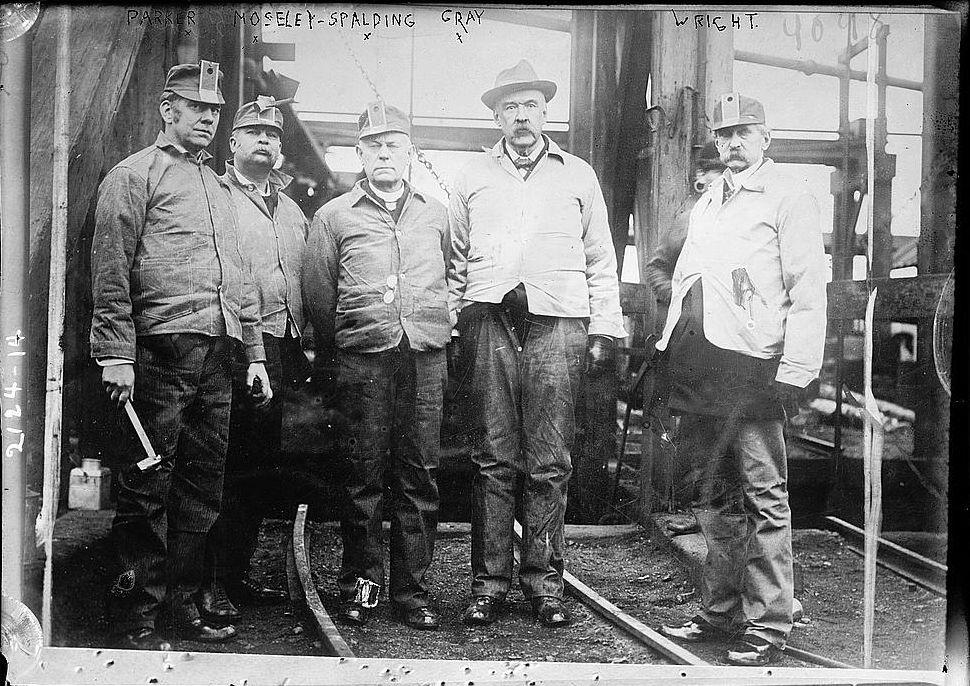
The operators accepted on October 13, on condition that each seat go to a particular kind of man, one of them “a man of prominence eminent as a sociologist.” They would not have a union man. Late on the night of October 15, with two of Morgan's partners at Jackson Place, Roosevelt named E. E. Clark, head of the Order of Railway Conductors, to the sociologist's seat, “the President assuming that for the purposes of such a commission the term sociologist means a man who has thought and studied deeply on social questions.” Morgan and Baer agreed by telephone. Roosevelt also added a Catholic bishop, John L. Spalding. The statement was released at 2:20 on the morning of October 16.
Writing to Senator Henry Cabot Lodge the next day, Roosevelt said the operators “would rather have anarchy than tweedledum, but if I would use the word tweedledee they would hail it as meaning peace.” The miners' convention accepted the commission on October 21, and the men went back to work on October 23.
Roosevelt won a full term in 1904. He died at Sagamore Hill, his home at Oyster Bay, New York, on January 6, 1919.