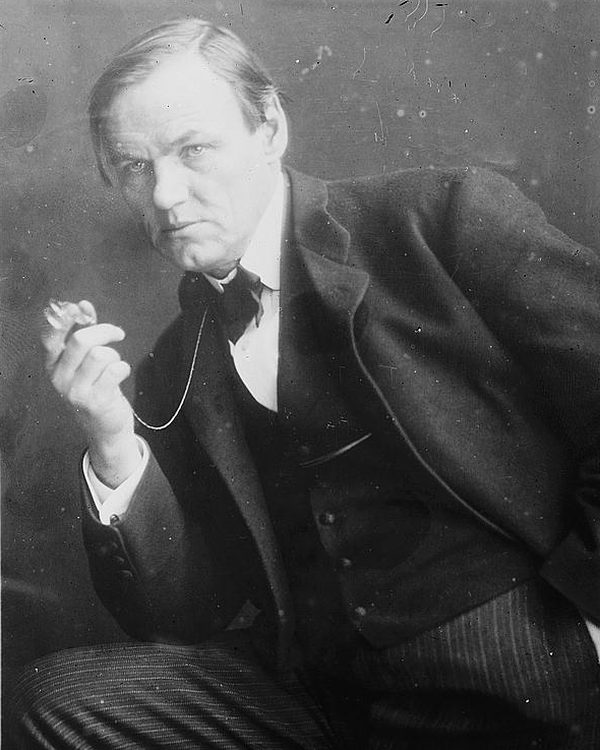
A Chicago lawyer
Clarence Darrow was born on April 18, 1857, at Farmdale, in Kinsman Township, Ohio. He was admitted to the Ohio bar in 1879 and moved to Chicago, where John P. Altgeld, later governor of Illinois, became his mentor. In 1891 he took a part-time job in the legal department of the Chicago & North Western Railway. Three years later he defended Eugene Debs and the leaders of the American Railway Union after the Pullman strike. Henry Demarest Lloyd had advised the union to hire him.
The anthracite case
When Theodore Roosevelt appointed the Anthracite Coal Strike Commission in October 1902, John Mitchell asked Darrow to lead the miners' case. Lloyd had already raised it with him in Chicago. Darrow reached Wilkes-Barre in early November, and his name headed the list of the miners' lawyers when the hearings opened in Scranton on November 14. That same month he was elected to the Illinois House, and the case kept him from taking his seat for several weeks.
The hearings ran in Scranton until December 20 and moved to Philadelphia in January 1903. The miners' side called miners, widows and children. On December 6 Darrow opened the case against G. B. Markle & Co. with Andrew Chippie, a twelve-year-old slate picker whose father had been killed in the mine. The company was setting the boy's pay, four cents an hour, against his father's debt. In a letter to Louis Brandeis that November, Darrow proposed arguing that the coal railroads charged “extortionate” freight rates.
His closing argument began on the afternoon of February 12, 1903, directly after George Baer's, and took up all of the following day. He spoke without a manuscript.
“If the work of this Commission does not result in getting rid of this abominably disgraceful evil of child-labor in Pennsylvania, then I think the people may well say that it has been a failure. … until you, Mr. Railroad President, or you, Mr. Lawyer, will take your child by the hand and lead him up the breaker stairs and sit him down to pick at that trough of moving coal, until you will take your pale girl to the silk mills, let me speak for the children of the poor.”Closing argument, Philadelphia, February 12, 1903
The commission's award, dated March 18, 1903, gave the miners a ten percent raise and set up a board of conciliation. It did not recognize the union.
Afterward
The case made Darrow the best-known labor lawyer in the country. He defended William Haywood of the Western Federation of Miners in 1907, and the McNamara brothers in the Los Angeles Times bombing case in 1911. In the 1920s came the cases most people know him for: Leopold and Loeb in 1924, John Scopes in 1925, and Ossian Sweet and his family in 1925 and 1926. In 1925 he wrote the introduction to the Autobiography of Mother Jones. He died at his home in Chicago on March 13, 1938.