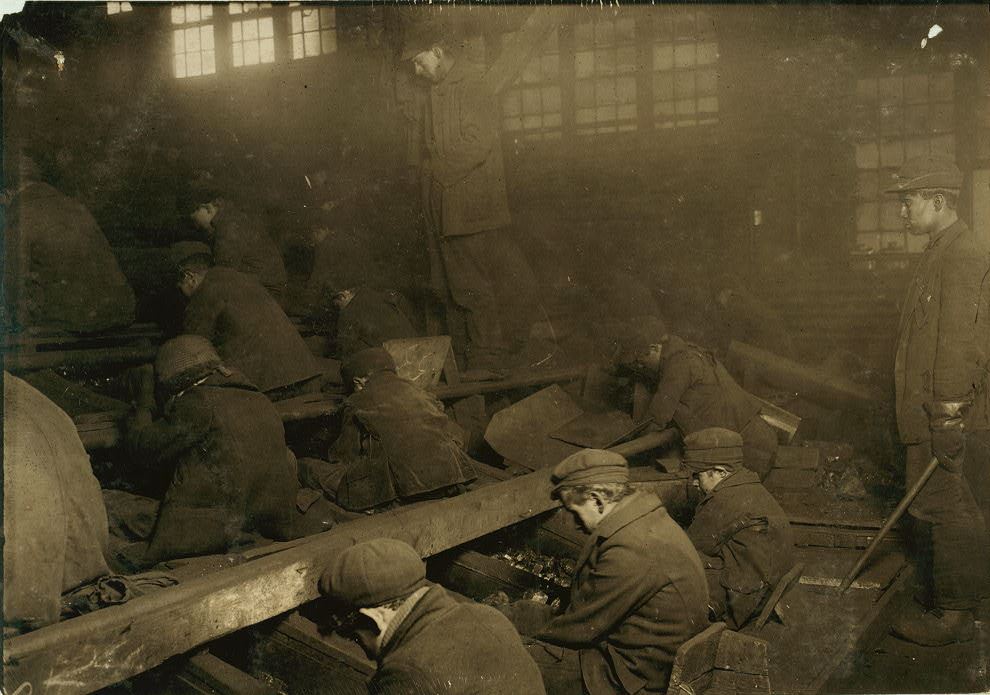
For generations the hard coal that heated American cities passed through the hands of children. They sat on boards laid across the chutes of the coal breakers of northeastern Pennsylvania, bent over the moving coal for ten hours a day, and picked out the slate and rock that the machinery could not. They were called breaker boys. Around 1900 the anthracite region employed some eighteen to twenty thousand slate pickers, most of them boys.
The breaker
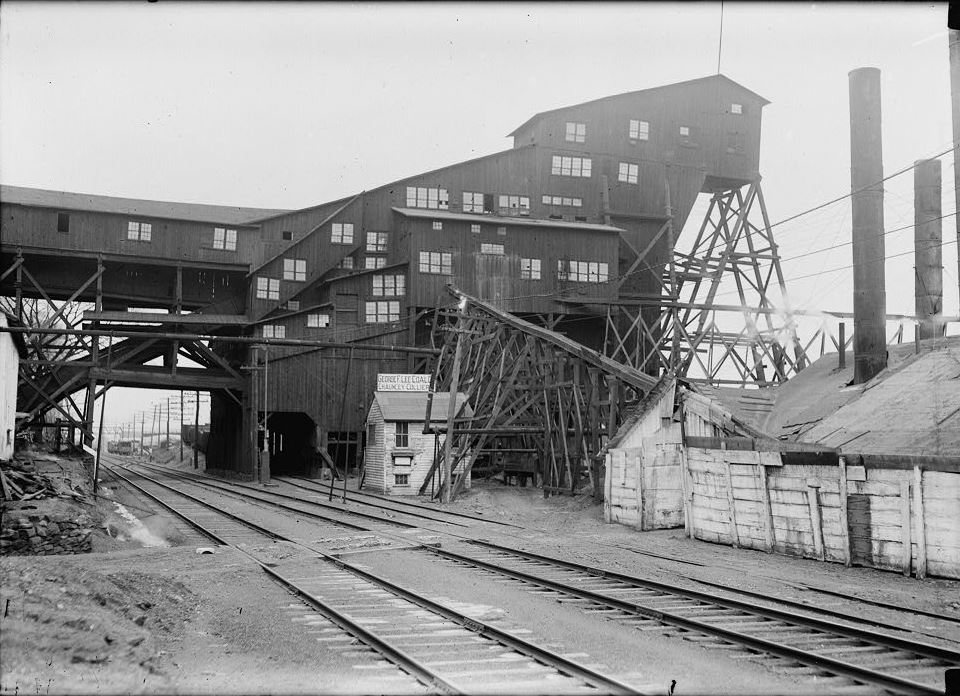
Anthracite comes out of the ground mixed with slate, rock and “bony” coal, and in lumps of every size. Before it could be sold it had to be broken, sorted and cleaned, and the building that did all three was the breaker: a tall timber structure at the head of the colliery. The one Owen Lovejoy visited in 1906 stood two hundred feet high. Mine cars were hauled up an incline to the top. Toothed rollers crushed the coal, and screens sorted it by size — lump, grate, stove, egg, chestnut, pea, buckwheat — into separate chutes that ran down through the building to the railroad cars below.
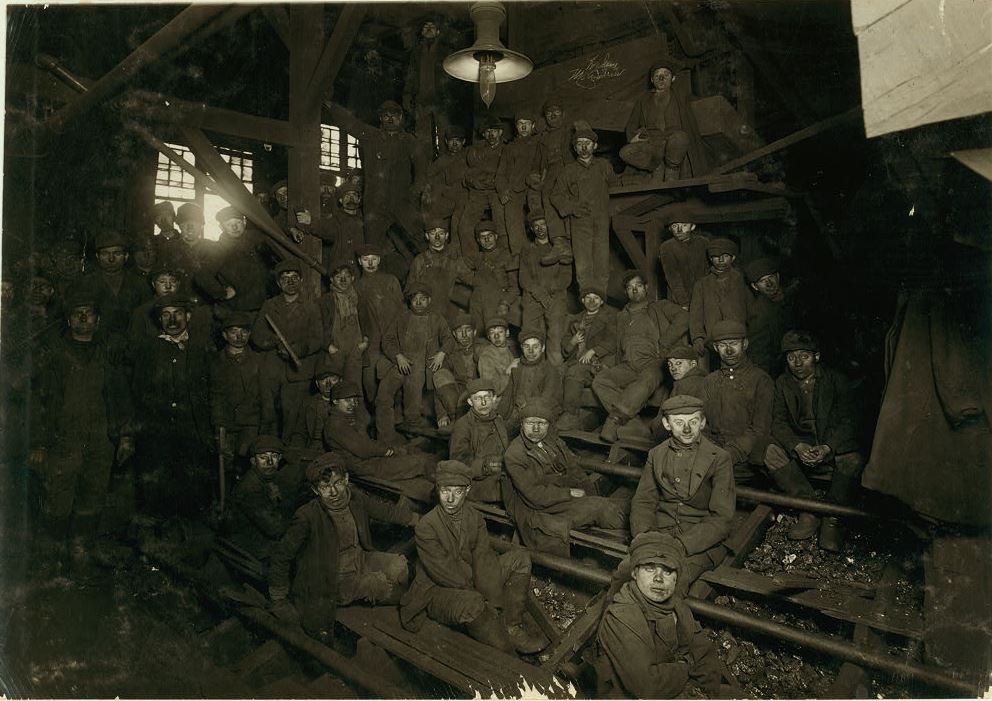
The machinery sized the coal; cleaning it was largely handwork. Peter Roberts, who studied the region at the turn of the century, reckoned that a single breaker employed fifty or sixty boys; Lovejoy, of the National Child Labor Committee, described one with “a hundred narrow boards laid across the coal-chutes — seats for a hundred boys.”
The work
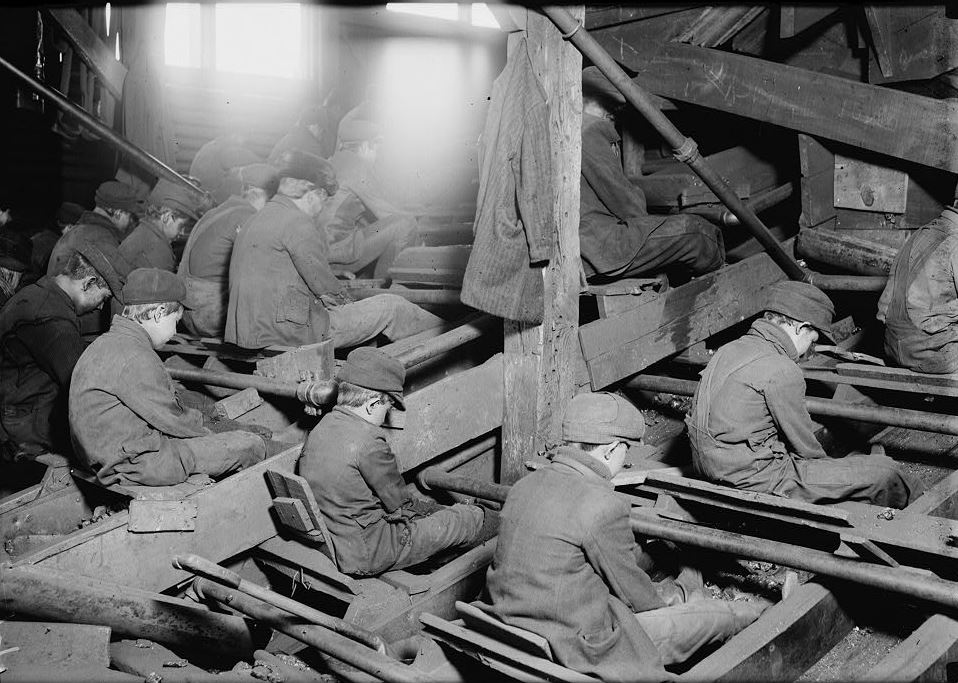
The boys sat astride the chutes, a few feet apart, on boards set one above another down a floor that sloped with the coal. Each controlled the flow with his feet and picked out the slate and rock as the coal ran beneath him. Stephen Crane, who went into a breaker for McClure's Magazine in 1894, described the room:
“In a large room sat the little slate-pickers. The floor slanted at an angle of forty-five degrees, and the coal, having been masticated by the great teeth, was streaming sluggishly in long iron troughs. The boys sat straddling these troughs, and as the mass moved slowly, they grabbed deftly at the pieces of slate therein.”
Stephen Crane, “In the Depths of a Coal Mine,” McClure's, August 1894
The day ran from seven in the morning to six at night, with an hour off at noon. When a colliery was working to full orders the day stretched to eleven hours, for the same pay. The noise, Roberts wrote, was deafening. It was also cold: breakers were meant to be heated, but, as the journalist Francis Nichols explained in 1903, “every pound of steam is needed in the mines.” The boys worked by touch, so they could not wear mittens. Where the coal was cleaned dry, the dust was thick enough that boys wore lamps on their caps in daylight.
Order was kept by the breaker boss. “The boss is armed with a stick,” Nichols wrote, “with which he occasionally raps on the head and shoulders a boy who betrays lack of zeal.” Boys who testified in 1902 described having their ears pulled and being “clubbed by the breaker boss, frequently.”
John Spargo, a reformer, tried the work himself for half an hour and wrote about it in The Bitter Cry of the Children (1906):
“I once stood in a breaker for half an hour and tried to do the work a twelve-year-old boy was doing day after day, for ten hours at a stretch, for sixty cents a day. The gloom of the breaker appalled me. … I could not do that work and live, but there were boys of ten and twelve years of age doing it for fifty and sixty cents a day.”
John Spargo, The Bitter Cry of the Children, 1906
- ~20,000slate pickers in the anthracite region around 1900, most of them boys. An official count in 1901 found 19,564; Roberts put the figure at “nearly 18,000” in 1904.
- 8–10the age many boys started, by the accounts of Nichols, Lovejoy and the boys themselves. The legal minimum was twelve until 1905, then fourteen.
- 10 hrsa day, 7 a.m. to 6 p.m. with an hour at noon; eleven when the colliery was working full orders.
- ~70¢a day, Nichols's average in 1903: about forty cents for a beginner, rising to ninety after four years.
Who the boys were
Most were the sons of mine workers, and most were the children of immigrants — Slavic, Irish, Welsh, English, and by 1911 Italian — though many had been born in Pennsylvania. Lovejoy, answering the claim that child labor was a problem of foreigners, wrote that the working children “are not foreigners. They are Americans!”
Families sent boys to the breaker because they needed the wages. Roberts found many “widows and poor families” among them, and a Pittston father told Spargo in 1902 that with his own pay so small, he “was glad to give a quarter to have the papers … filled out” that put his son to work under age. Roberts also blamed parents who exploited their children: of sixty-four under-age boys he looked into, thirty-five came from families that owned their homes.
The breaker was the bottom rung of a ladder every boy in a mine patch knew. From the breaker a boy went underground as a door boy, then a mule driver, then a miner's laborer, and finally a miner. When age or injury ended a miner's working life, he often came back to the breaker to pick slate beside the boys. A clergyman in the region put it in one line in 1902: “Once a miner and twice a breaker-boy.” A miner told investigators from the U.S. Children's Bureau a generation later: “You begin at the breaker and you end at the breaker, broken yourself.”
What it cost them
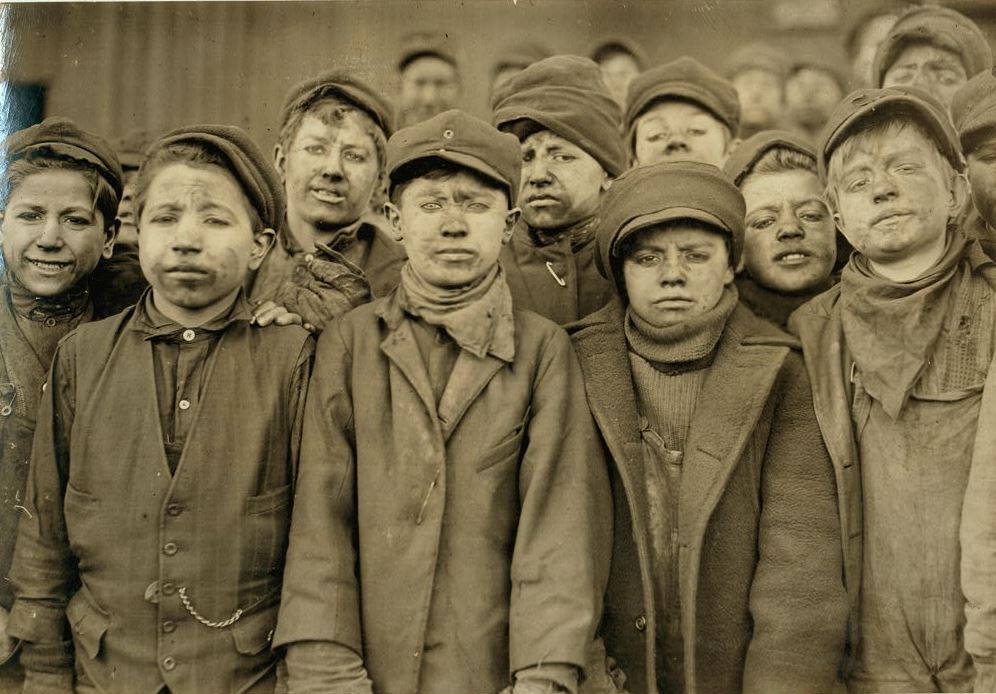
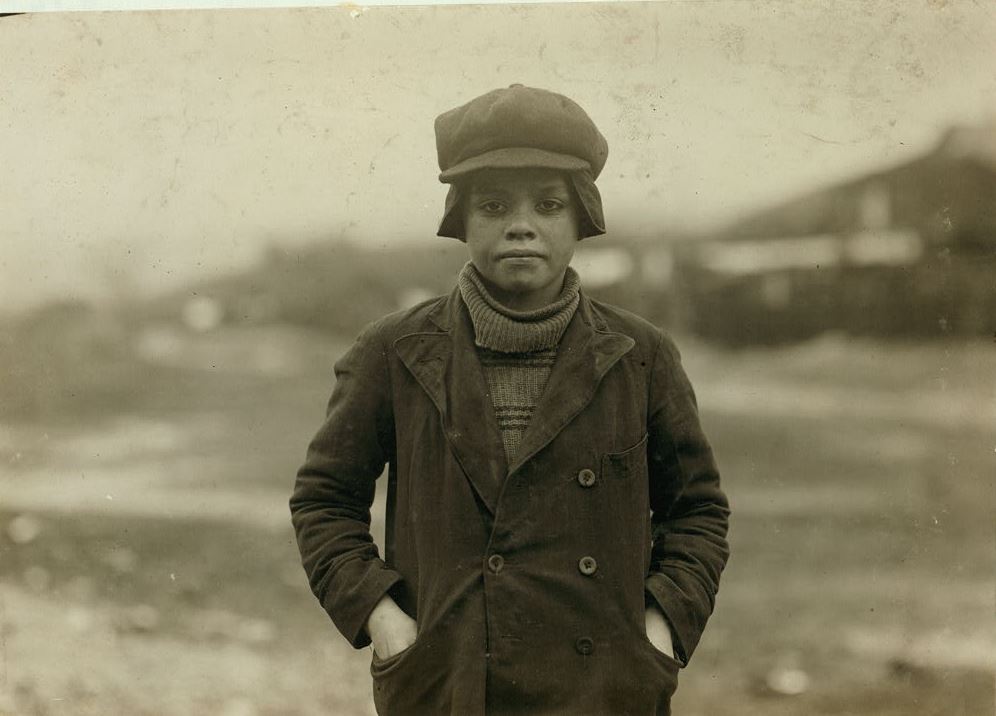
The first cost was to the hands. Slate is sharp, and in their first weeks new boys' fingers were cut and their nails broken; the older boys called the bleeding fingertips “red tops.” Where the coal was washed, the water left hands sore and swollen. Years bent over the chutes left boys, in Spargo's words, “bent-backed like old men.”
The dust went into their lungs. Crane wrote that the boys breathed it “until their lungs grow heavy and sick with it”; the period name for what it led to was miners' asthma. The machinery was more sudden. “Many of them fall into the machinery and are mangled,” Roberts wrote in 1904, “or down the chutes and are smothered.” The state's own figures for 1905 counted twenty-four slate pickers killed in the anthracite region, eighteen of them between fourteen and sixteen years old. The state's chief of mines blamed boys who climbed over the safety guards.
“‘I went to the breaker when I was eight years old, and it never done me no hurt!’ declared the burly breaker-boss.”
Owen R. Lovejoy, In the Shadow of the Coal Breaker, 1906
The law, and the quarter that beat it
Pennsylvania set minimum ages for colliery work long before the practice ended. The problem was proof. For most of this period a boy's age was whatever his parent swore it was, before a notary or a justice of the peace, for a fee of twenty-five cents. The companies accepted the paper. Boys told Lovejoy, “I bought a paper off de squire for twenty-five cents.” When a boy named Stanley Letuvinak was killed falling from a breaker at Wanamie — ten years old by his baptismal record — the coroner's jury cleared the company because it held an affidavit from his father that he was fourteen.
| Year | What the law said |
|---|---|
| 1885, 1891 | No boy under 12 in or around the breaker; none under 14 underground. Proof of age: the parent's sworn statement. |
| 1903 | The legislature raises the limits to 14 in the breaker and 16 underground. The courts strike the law down. |
| 1905 | Act of May 2, 1905: 14 in the breaker, 16 underground, a fine of $10 a day for each child employed, and employment certificates from school superintendents with proof of age and literacy. That October a Luzerne County court struck down the certificate provisions but upheld the age limits. |
| 1909 | A new act sets one limit, 14, for mines and breakers alike, with documentary proof of age. In 1910 the Attorney General's office rules that it has repealed the 1905 act, lowering the underground age to 14 — “an unfortunate error in drafting,” Lovejoy called it. |
| 1911–1915 | The underground limit returns to 16. The 1915 child labor law sends working 14- and 15-year-olds to continuation school for eight hours a week and caps their hours at nine a day. |
| 1938 | The federal Fair Labor Standards Act sets 16 as the national minimum age for most work. |
Even then enforcement lagged. In 1919 federal investigators found boys in the Shenandoah district still buying “work papers” from the squire, now for fifty cents, and neither state department regularly inspecting the breakers for child labor.
The boys before the Strike Commission
Child labor was not among the demands of the 1902 anthracite strike. It reached the national stage anyway, at the hearings of the commission President Theodore Roosevelt appointed to settle the strike, which opened in Scranton on November 14, 1902. Over the following weeks the miners' lawyers brought breaker boys to the witness stand.
Andrew Chippie, twelve, told the commission that his father had been killed in the mine four years before, still owing the company money, and that his own wages of four cents an hour went against the debt; the company later disputed his account. Paul Hemhand, ten, earned sixty-four cents a day, and showed the commissioners fingernails worn “below the quick.” Stanley Gustick, eight, was sent down before he could testify because he did not understand the oath. “The commissioners see how small he is,” said the chairman, Judge George Gray, “and will agree that he is too small to be working in the breaker.”
The operators answered that the work was light. “Slate picking is a very easy occupation,” the Lehigh Coal and Navigation Company told the commission, “compared to the work done by the boy upon a farm.” Clarence Darrow, closing for the miners in February 1903, made the boys the center of his argument:
“If the work of this commission does not result in getting rid of this abominably disgraceful evil of child-labor in Pennsylvania, then I think the people may well say that it has been a failure. … until you, Mr. Railroad President, or you, Mr. Lawyer, will take your child by the hand and lead him up the breaker stairs and sit him down to pick at that trough of moving coal, … let me speak for the children of the poor.”
Clarence Darrow, closing for the United Mine Workers, February 1903
The commission's report of March 1903 gave the subject a single paragraph. It noted that child labor was “not a matter of submission, but concerning which much testimony was offered,” found that the legal age “is not placed sufficiently high,” and called for “a more rigid enforcement of the laws which now exist.” The award itself said nothing about it. But the hearings had put the facts on the record. When the National Child Labor Committee was founded in New York in April 1904, its first field investigation was in the anthracite mines of Pennsylvania — prompted, Lovejoy wrote, by “facts revealed in the hearings.”
Lewis Hine's photographs
The Committee's investigators came back with numbers. In one borough of seven thousand people, the school superintendent estimated that at least 160 of the 350 breaker boys were under thirteen; Nanticoke's put the number of breaker boys under fourteen at six hundred, and Plymouth's at about a thousand. The state's mine inspectors disputed such figures — their own survey in 1905 found 8,121 boys between fourteen and sixteen in and around the breakers, and doubted the ages of 760 — and the argument over how many boys were under age ran for years.
The Committee's most lasting evidence came from a camera. Lewis Hine photographed for it from 1908 to 1924. In January 1911 he worked the breakers of Luzerne County — the Ewen Breaker at South Pittston, No. 9 at Hughestown, the Bliss breaker near Nanticoke, the Chauncy colliery — and wrote down names, ages, and what the boys told him. His captions are the record: Angelo Ross, “said he was 13 years old, but very doubtful”; a boy at Chauncy who, the coroner told him, “was but a few days past his 15th birthday when he was killed.” The photographs on this page are his, and they are among the best-known images of American child labor.
How it ended
Machines ended the breaker boy as surely as laws did. Roberts noted as early as 1904 that improved cleaning machinery had displaced many boys. In March 1913 Hine photographed a mechanical picker at the Spencer Coal Company in Scranton; his caption reports that it left only one or two percent slate in the coal, where boys left between fifteen and sixty.
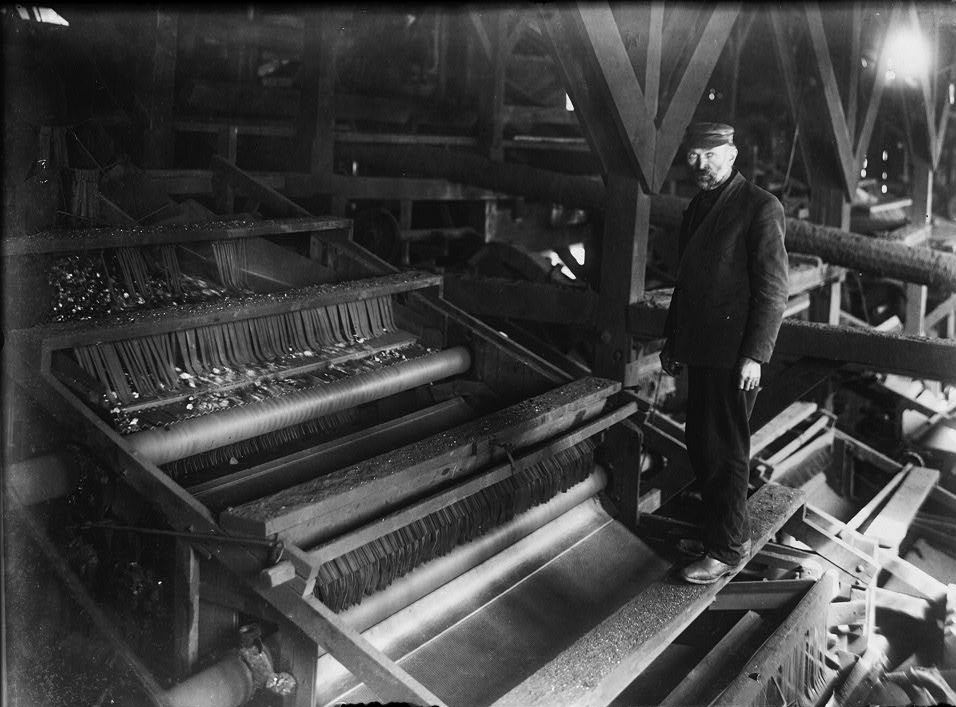
The arithmetic did the rest. A Committee investigator in 1916 was told that a jig — a machine that separated slate from coal in water — cost $500 and did the work of ten boys at $1.10 a day, so it paid for itself in forty-eight days. When the 1915 law required working boys under sixteen to spend eight hours a week in school, companies simply stopped hiring them: one breaker went from 120 boys to 45, another from 110 to 23. “Give us enough jigs,” a foreman said, “and we wouldn't have any boys.”
The change was gradual. In 1919 federal investigators in the Shenandoah district still found hundreds of boys in the breakers; nine in ten boys there whose first job had been at the mines had started as breaker boys. But between the laws and the machines, the work of young children in the breakers had been sharply cut by around 1920, and the breaker boy was passing into the history of the region.
Sources
Quotations are from the original publications. Hine's captions are quoted as he wrote them. Figures for the number of boys, their ages and their pay vary between sources; the ranges given here are the best-supported ones.
- Stephen Crane, “In the Depths of a Coal Mine,” McClure's Magazine, August 1894.
- Peter Roberts, Anthracite Coal Communities (1904), and The Anthracite Coal Industry (1901).
- Francis H. Nichols, “Children of the Coal Shadow,” McClure's Magazine, 1903.
- John Spargo, The Bitter Cry of the Children (1906).
- Owen R. Lovejoy, “Child Labor in the Coal Mines,” Annals of the American Academy of Political and Social Science, March 1906, and In the Shadow of the Coal Breaker (1906; National Child Labor Committee pamphlet, 1907).
- Report to the President on the Anthracite Coal Strike of May–October, 1902 (1903).
- The Anthracite Coal Strike — Clarence Darrow Digital Collection, University of Minnesota Law Library. Testimony, arguments and Darrow's closing.
- Pennsylvania Department of Mines, Report, Part I — Anthracite, 1905.
- Act of May 2, 1905, P.L. 344, No. 222 (Pennsylvania General Assembly).
- Florence I. Taylor, “The Passing of the Breaker Boy,” Child Labor Bulletin, 1917.
- U.S. Children's Bureau, Child Labor and the Welfare of Children in an Anthracite Coal-Mining District (1922).
- Perry K. Blatz, “The All-Too-Youthful Proletarians,” Pennsylvania Heritage, Winter 1981. The best short modern account.
- National Child Labor Committee collection, Library of Congress. Lewis Hine's photographs, with his captions. No known restrictions on publication.