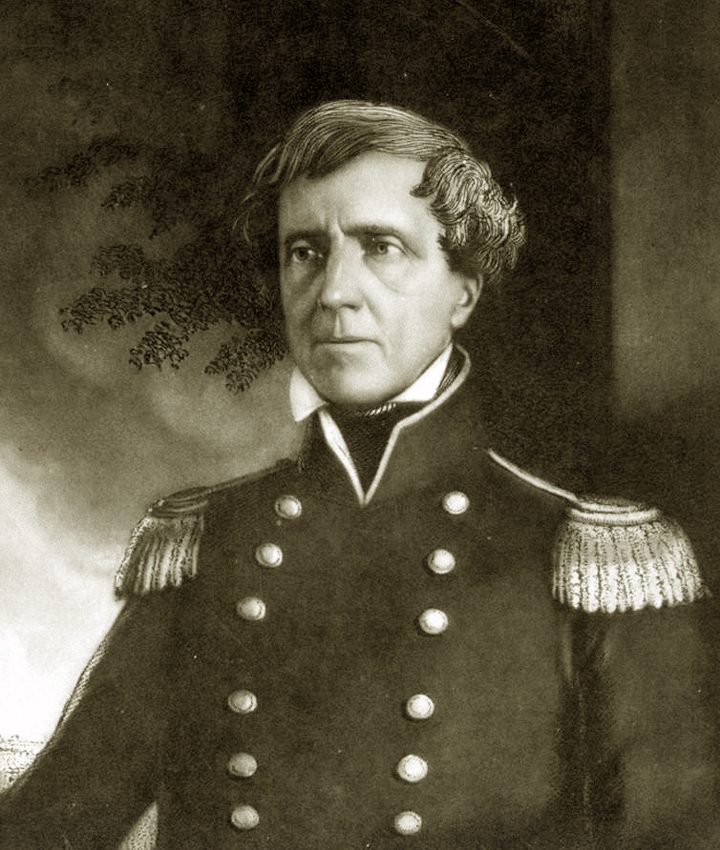
Authority on paper
Stephen Watts Kearny was a career Army officer whose 1846 march from Fort Leavenworth through Santa Fe and toward California made him central to the American conquest of the Southwest. His instructions gave him a military and governing role, but distance and fast-moving events made command a practical argument rather than a neat chain of command.
At San Pasqual in December 1846, Kearny's exhausted dragoons fought Andrés Pico's Californio lancers. American losses were severe, and the result was at best a tactical draw and plainly not the effortless triumph later national stories preferred. Kearny reached San Diego with help from Stockton and eventually asserted his authority over California.
His conflict with John C. Frémont over the governorship led to Frémont's court-martial for mutiny. Kearny's insistence on hierarchy was legally defensible. It was also politically awkward: Stockton had already made Frémont governor, and Frémont had signed the Cahuenga settlement. Kearny won the command dispute, but not the public-relations contest.