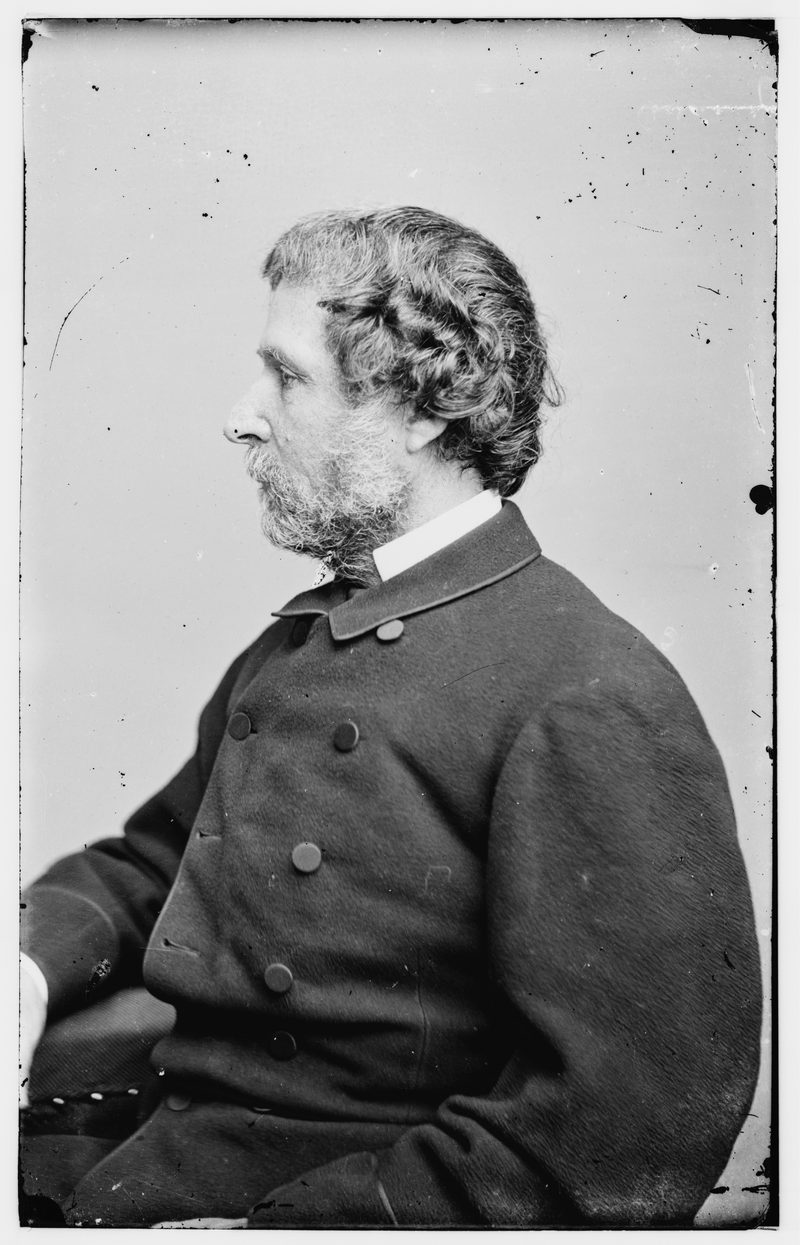
Surveyor, actor, author
John Charles Frémont's expeditions turned western geography into national political theater. In 1846 he re-entered California with a small armed party after Mexican authorities had ordered him out. His refusal to leave, withdrawal north, and later return to Sonoma made it impossible to maintain a clean line between surveying and intervention.
Frémont took command of the Bear Flaggers and later accepted Stockton's appointment as military governor. When Kearny arrived with competing authority, the dispute became a test of military hierarchy and personal ambition. Frémont was convicted of mutiny, resigned his commission, and was pardoned by President Polk.
His reports and memoirs are indispensable sources and strategic acts of self-defense. They made the West legible to eastern readers while placing Frémont at the center of nearly every important scene. Read them for evidence, but also ask what a narrator gains by making history look inevitable.